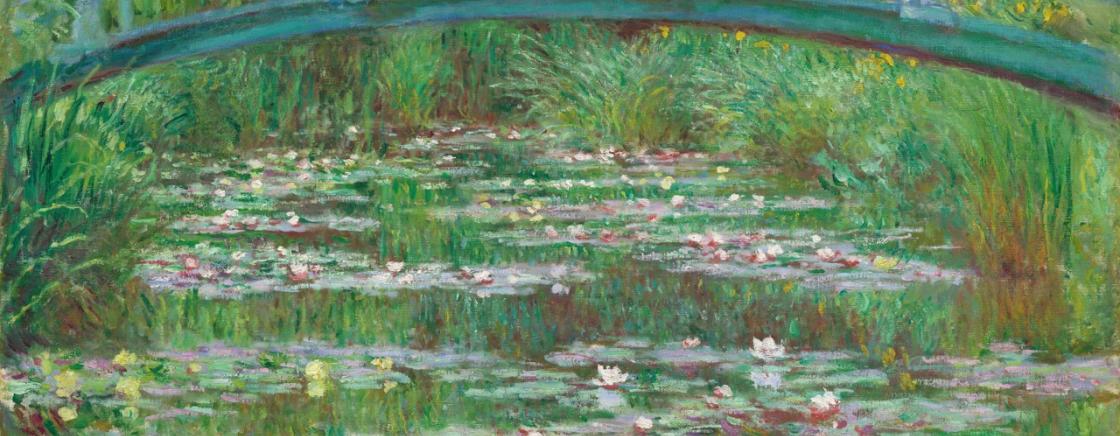
There are gazes that reinvent the world and palettes that capture the elusive. When Claude Monet settled in Giverny in 1883, he was not merely seeking to paint nature, but to seize the very vibration of light upon the water. This obsessive quest, which would lead to the monumental masterpieces of the Water Lilies, remains to this day the most beautiful lesson in aesthetics in the history of art.
At Giverny, the master of Impressionism composed his garden like a living palette, diverting the branches of the Epte river to create his famous pond. This water garden became his open-air studio. Monet displayed infinite patience, observing how the passing of a cloud or the morning mist metamorphosed the color of the petals. He no longer painted the object, but the envelope—the light that circulates between the painter and his subject. His series of Haystacks or the Rouen Cathedrals had already paved the way, but it is with the Water Lilies that he reached a form of chromatic spirituality, breaking free from the line to leave room only for pure sensation.

This long horticultural meditation found its historical pinnacle in the cycle of the Grandes Décorations at the Orangerie. Conceived as a final bouquet to his career, these monumental works were offered to France in the aftermath of the Great War as a symbol of restored peace. This transition from the intimacy of the Giverny garden to the immensity of the museum's oval rooms marks a crucial step: the transformation of a study of nature into a total immersive experience. Monet imagined these eight panoramic compositions to embrace the curve of the walls, plunging the spectator into a universe without a horizon. The deep blues, twilight purples, and sea greens are no longer mere pigments here, but the result of an entire life dedicated to the study of retinal persistence.

This devotion to beauty and precision finds a particular resonance within Hôtel Le Walt. Our establishment, a true tribute to the pictorial arts, celebrates this sensitivity where every nuance contributes to the harmony of a stay. In the wake of Monet, our House cultivates a taste for detail and the elegance of atmosphere, offering our guests a setting where décor dialogues with the heritage of the great masters. The proximity of our address to the Musée de l’Orangerie allows our residents to transition, in just a few moments, from the serenity of their room to the silent contemplation of the masterpieces by the master of light.
Succumb to this visual symphony and let Paris reveal its most beautiful artistic secrets to you. We would be honored to accompany you on this cultural exploration, transforming your stopover at Le Walt into an enchanted interlude, cradled by refinement and the soul of artists.